












































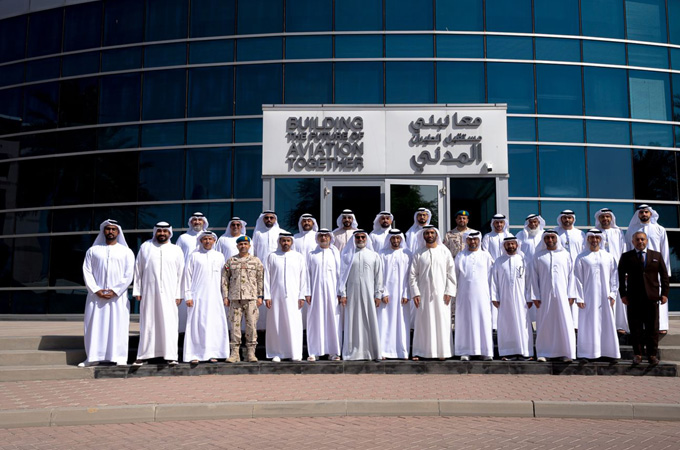
The UAE’s General Civil Aviation Authority (GCAA) and the Ministry of Defence today (February 12) signed an agreement for the implementation of the fourth phase of the country’s Airspace Restructuring Project, aimed at boosting capacity and efficiency in national airspace.
This phase will focus on upgrading air traffic management systems, increasing air route capacity and improving coordination among different airspace users, while supporting planned expansions by airports and national carriers.
The MoU was signed by GCAA Director-General Saif Mohammed Al Suwaidi, alongside representatives of civil aviation authorities and the Ministry of Defence. The accord sets out the financial, legal and technical governance framework for the project.
Al Suwaidi said: "The fourth phase of the Airspace Restructuring Project represents a pivotal step in enhancing the UAE’s readiness for the future of aviation, ensuring the accommodation of the expected growth in air navigation traffic, and ensuring a flexible, seamless and future-fit airspace system and infrastructure while maintaining the highest levels of safety and operational efficiency."
Ahmed Al Jallaf, Assistant Director-General - Air Navigation Services, GCAA, said this Project is a continuation of the successes achieved in the previous three phases, as the Authority continues with its strategic partners to develop an integrated national airspace management system.
"It will also help enhance integration among all air operations, in commitment to national and global air navigation plans, which enhances the UAE’s position as a leading global hub in the aviation sector," he noted.
The phase would enhance the UAE’s readiness to accommodate expected growth in air traffic while maintaining high safety and operational standards, he added.
Ahmed Al Jallaf, Assistant Director-General for Air Navigation Services at the GCAA, said the project builds on earlier phases to develop an integrated national airspace management system aligned with international standards set by the International Civil Aviation Organisation.
This project is part of the UAE’s continuous efforts to develop the aviation sector, support innovation and modern systems in airspace management, and strengthen the UAE’s role as a pivotal hub for civil aviation at the international level, noted Al Jallaf.
Air traffic in the UAE rose 6.8% in 2025 to 1,098,851 flights, with an average of about 3,010 daily air movements, reflecting continued growth in the sector, he added.