






















CONVENTIONAL high-rise drainage systems in the Gulf typically rely on bulky pipe ducts: d160 drainage stacks, secondary ventilation pipes, and horizontal runs that must maintain slope under ceilings.
Swiss sanitary solutions provider Geberit says its HDPE SuperTube system featuring clever fittings replaces this with a hydraulically optimised single-stack solution using d110 pipes, no additional ventilation, and horizontal runs up to 6 m without slope, while delivering around 12 litres per second discharge capacity and offering space-saving benefits.
“SuperTube delivers value beyond space savings. By combining hydraulic performance, reduced material consumption, faster installation and long-term durability in a single solution, it helps developers, consultants and contractors optimise both construction efficiency and building performance,” states Richard Bieler, Head of Product Management and Technical Sales Support (Gulf Office).
Thanks to the optimised hydraulics, the wastewater is converted into an annular flow with a column of air created in the centre of the stack. This means that ventilation pipes are no longer needed in the ducts, says Geberit. As the flow of water has also been optimised when the pipe changes direction, horizontal pipes measuring up to 6 m can be installed without the need for a slope. This results in thinner ducts and higher rooms.
A newer variant, Silent-db20 SuperTube, combines the space-saving advantages of the SuperTube system with enhanced acoustic performance, making it particularly well suited to premium residential and hospitality towers where noise control is a key consideration.
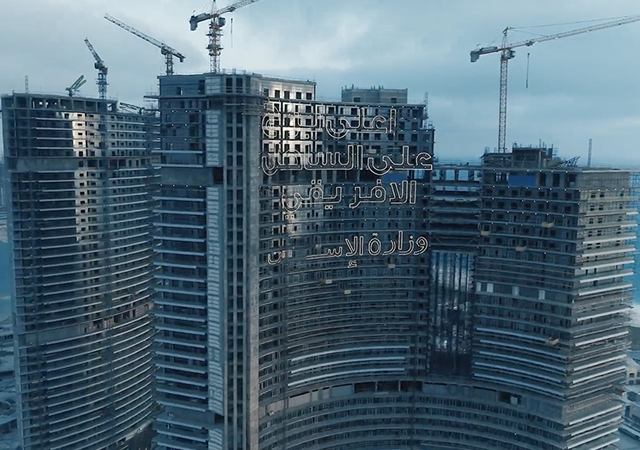
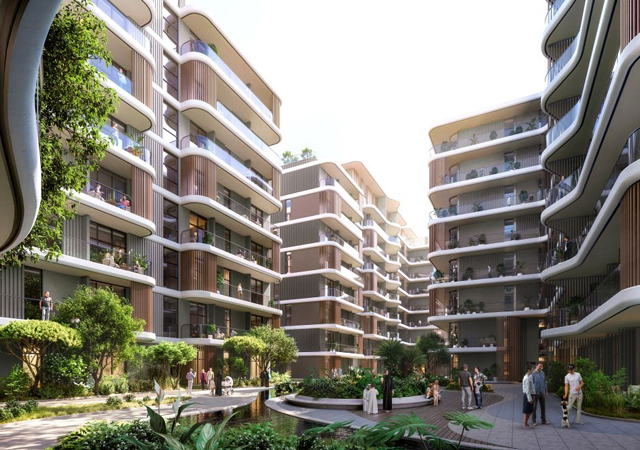
At the 18-tower complex in New Alamein City, the number of stacks required was reduced from 162 down to 54 using SuperTube.
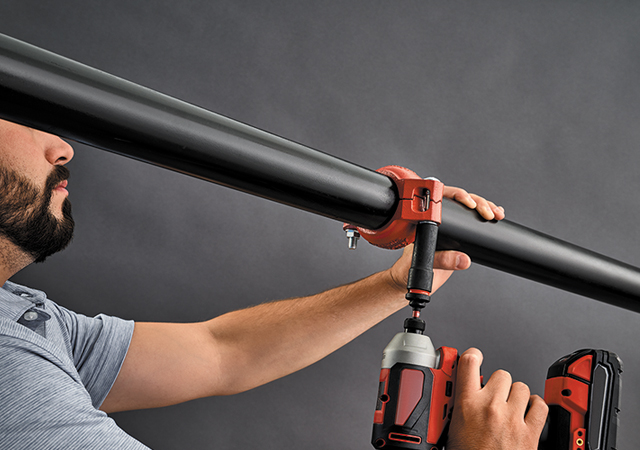
The system integrates three specially engineered fittings – Sovent, BottomTurn and BackFlip – with the Geberit Silent-db20 high-insulation drainage system to create the SuperTube effect. Together with the proven Geberit PE discharge pipe, renowned for its high load-bearing capacity, these components form an advanced hydraulic solution that delivers greater design flexibility, improved drainage performance and superior sound insulation. All components are permanently welded, ensuring durable, leak-tight connections for long-term reliability.
Why SuperTube matters for the region’s tall buildings
High-density urban corridors in Dubai, Riyadh, and beyond are defined by narrow floor plates, premium net-to-gross ratios, and strict shaft-sizing targets. SuperTube’s rotating annular flow creates a stable central air column, allowing grey- and wastewater to share one stack and eliminating the third ventilation stack of a conventional triple-stack arrangement. According to Geberit, this can significantly reduce pipe duct cross-sections, translating directly into more sellable or leasable area and reduced material costs.
“Instead of a three-way stack with two stacks used for greywater and wastewater and the third for ventilation, SuperTube requires only a single stack – greywater and wastewater are not separated and a ventilation pipe is dispensed with completely. This is based on sophisticated hydraulic technology. Because only one stack is needed instead of three, the pipe ducts are up to 50 per cent smaller than in traditional systems. This results in a larger overall living space and a significant reduction in the amount of pipe material needed,” Bieler elaborates.
For developers working under tight cost and space constraints, every centimetre saved in shafts and under ceilings can be reinvested into larger apartments, higher ceilings, or additional services. The ability to install horizontal runs up to 6 m without slope also simplifies ceiling design and coordination with mechanical, electricial and plumbing (MEP), heating, ventilation and air-conditioning (HVAC), and fire systems, the Swiss company says.
SuperTube has been installed successfully in numerous projects in the region. A recent high-rise application in New Alamein City in Egypt has demonstrated dramatic reductions in stack counts – from 162 planned stacks down to 54 using SuperTube – along with around 50 per cent installation time savings and 210 sq m of space gain, equivalent to nearly $1 million in area value at local rates, according to Geberit.
The project consists of high-rise residential buildings, luxury hotels, cultural facilities and public infrastructure that will transform the region into a modern urban centre. The 18 towers required a high-capacity drainage system in narrow ducts, the company says.
Looking ahead, Geberit says SuperTube and its Silent-db20 variant are poised to gain wider traction among Gulf developers seeking to squeeze maximum value from their towers, which are simultaneously taller, denser, and more demanding in terms of acoustic comfort.
The globally operating Geberit Group is a European leader in the field of sanitary products and celebrated its 150th anniversary in 2024. Geberit operates with a strong local presence in most European countries, providing unique added value when it comes to sanitary technology and bathroom ceramics.
Its production network encompasses 26 manufacturing facilities, of which four are located overseas. The group, headquartered in Rapperswil-Jona, Switzerland, has around 11,000 employees in more than 50 countries and generated net sales of CHF3.2 billion ($4.02 billion) in 2025.