




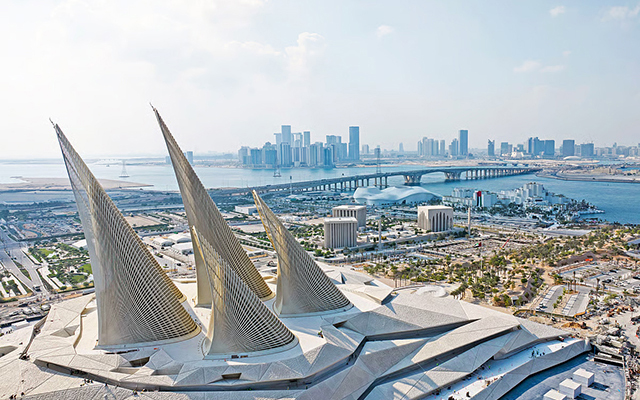

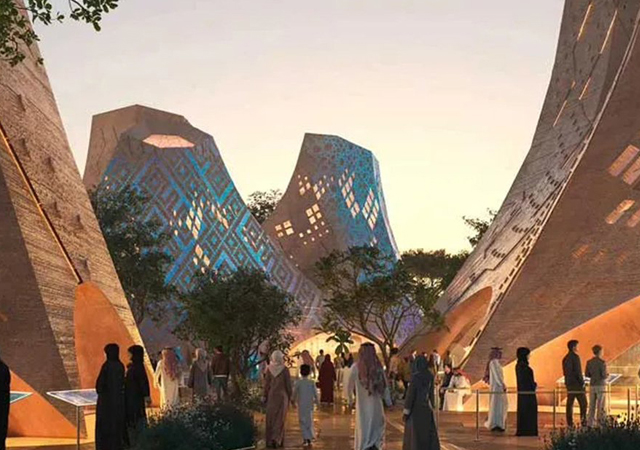




Soaring above Abu Dhabi’s Saadiyat Island, the falcon-wing towers of the Zayed National Museum stand as a striking testament to modern architecture. Yet, bringing this tribute to the late Sheikh Zayed bin Sultan Al Nahyan to life required an equally monumental engineering feat behind the scenes.
To provide the critical lifting muscle needed to build this museum, one of the world’s largest land-based cranes has deployed, utilising its immense reach to lift heavy components from far outside the busy construction zones to complete the intricate, climate-engineered structure ahead of its opening last December. Heavy lifting specialist Mammoet’s massive SK series crane transformed the highly congested, active jobsite into a masterclass of surgical modular installation.
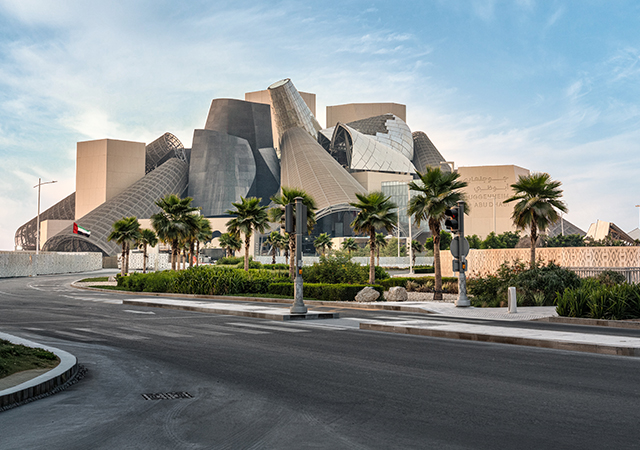
Zayed National Museum, developed by the Department of Culture and Tourism Abu Dhabi as the centrepiece of the Saadiyat Cultural District, features five distinctive wing-shaped towers designed to draw cooler air through the building. To deliver this complex design safely, the main contractor joint venture of Besix and Trojan General Contracting focused an ambitious modular strategy that could reduce work at height, accelerate build time, and limit disruption across an active construction site with multiple trades and tower cranes operating at the same time.
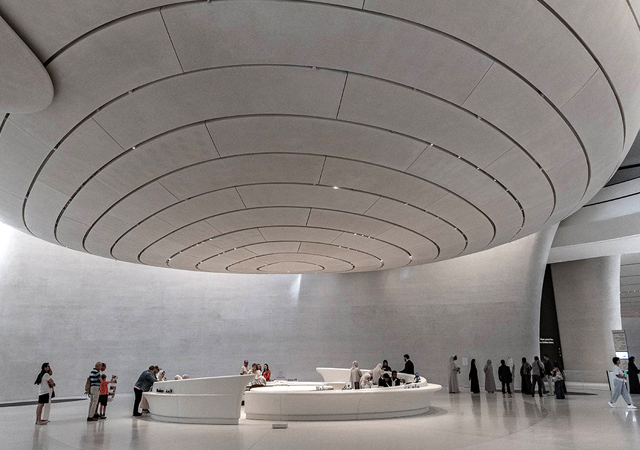
Four pod-shaped gallery units form the base of the ‘wings’ and sit above the central lobby.
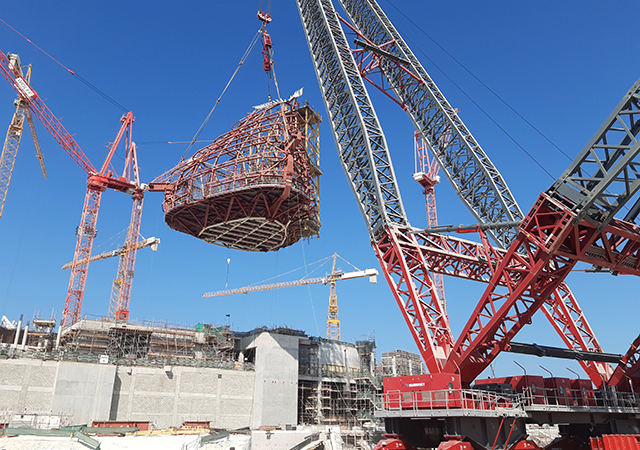
On the first floor, four pod-shaped gallery units form the base of the wings and sit above the top-lit central lobby, which is set into the ground to support thermal performance. These pods were prefabricated at ground level on site, then lifted and installed onto their foundations inside the museum. This modular construction approach helped improve safety and quality while keeping the wider construction programme moving.
Besix and Trojan General Contracting approached Mammoet in the early phase of the project to develop the best lifting and installation method for the prefabricated pods and the wing components. The initial plan considered using a large crawler crane, but the museum’s elevated construction area and surrounding site constraints meant this option would require significant backfilling to create enough working space for crawler crane operations, including the superlift. It would also impact ongoing civil activities and tower crane movements.
After studying the lifting requirements and site conditions in detail, Mammoet engineers proposed an alternative method using the Mammoet SK series crane. With its high lifting capability and long outreach, the SK crane allowed the company to position the crane away from the busiest construction zones, staying clear of tower cranes while still reaching the lift points inside the structure. This reduced congestion, supported safer lifting operations, and allowed other work fronts to continue with minimal disruption, according to Mammoet.
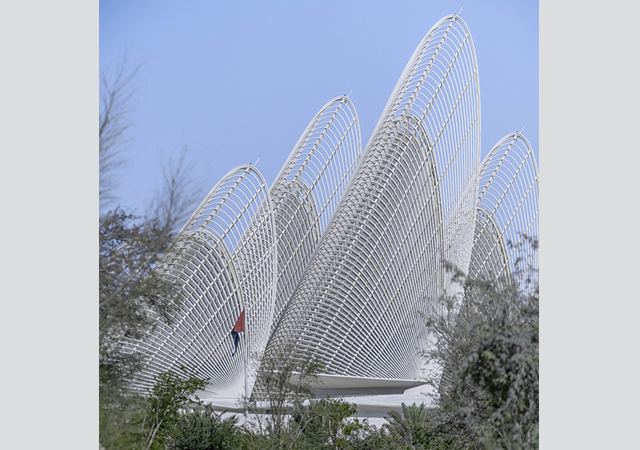
Zayed National Museum features five distinctive wing-shaped towers.
The crane’s large operating radius also allowed the pods to be picked from their fabrication position and installed onto their foundations with fewer relocations, which improved efficiency and reduced risk. To suit site constraints and available working space, the SK crane was rigged at two locations: first in the SK350 configuration and then it was relocated and reconfigured into the SK190 configuration, which required a smaller footprint, highlighting the versatility of the SK series’ design to support complex heavy lifts across changing site conditions, Mammoet points out.
In both areas, the crane was rigged with a 135-m main boom, and lifts were executed with wind speeds limited to 14 m/s and only under a decreasing forecast, following strict criteria defined in the engineered lift plan to protect people, the load and the structure, the company adds.
The heaviest lift reached 612 tonnes, with a working lift radius of over 150 m. Ground pressure was also carefully managed, with the SK crane maintaining a worst-case ground-bearing pressure of 26.9 tonnes/sq m during these lifts, supporting stable operations without excessive ground preparation. Mammoet says it engineered bespoke adjustable rigging using strand jacks, enabling controlled tilting, fine adjustment and rotation from fabrication orientation to final installation orientation. This precision was essential to safely install the large, irregular-shaped pods within a tight footprint.
Opened on December 5, the Zayed National Museum offers permanent galleries, special exhibitions and outdoor spaces that connect visitors to the UAE’s heritage and its place in the world.