






















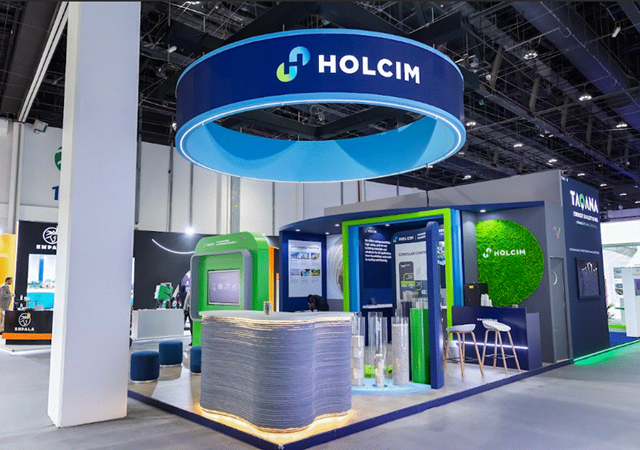
Swiss building materials giant Holcim has launched two major sustainability initiatives in the UAE aimed at reducing the carbon footprint of the region’s booming construction sector and accelerating circular building practices.
The dual launches of ECOPlanet, the country’s lowest-carbon cement crafted from locally sourced materials, and ECOCycle, an advanced circular construction technology platform, come as the Gulf nation increasingly prioritises industrial self-reliance and waste diversion.
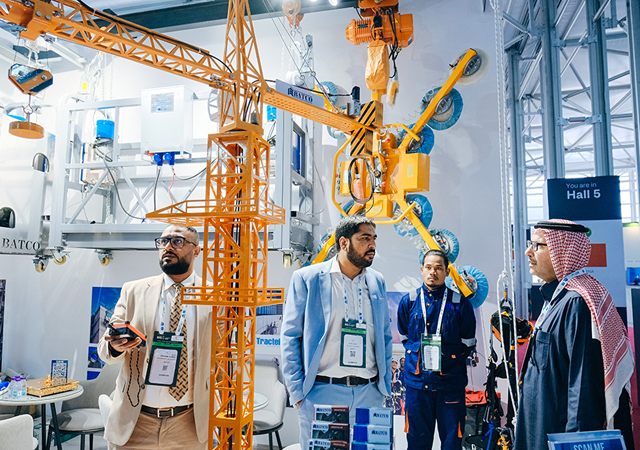
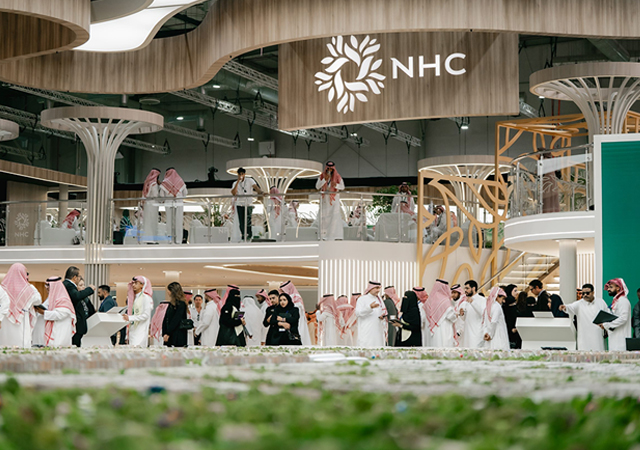
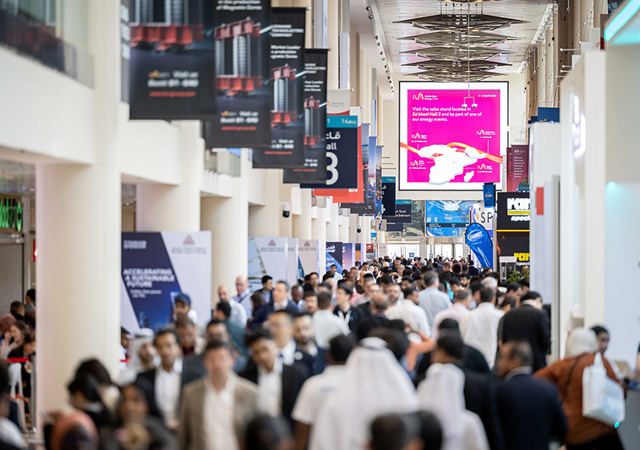
These green solutions were launched at the Make It In The Emirates event at ADNEC Centre, Abu Dhabi, last month, marking a landmark moment in the country’s journey toward smarter, more sustainable construction.
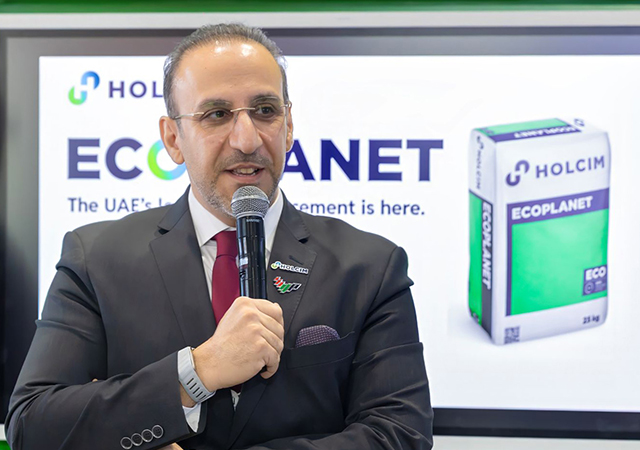
Said launches EcoPlanet at the Make It In The Emirates event at ADNEC Centre, Abu Dhabi
The introduction of ECOPlanet marks a tactical shift toward creating a more resilient domestic manufacturing base while minimising dependence on imported construction inputs. Produced from materials sourced within the country, the low-carbon cement achieves a 30 per cent reduction in its carbon footprint compared to traditional standard cement and offers developers, contractors, architects and engineers a locally made solution that aligns with both sustainability targets and national industrial priorities, says Holcim.
Holcim engineered the formulation to offer identical strength, durability, and consistency to standard varieties, allowing engineers, readymix producers, and contractors to seamlessly integrate the material into existing workflows for large-scale infrastructure and commercial developments.
In the UAE, readymix concrete producer Conmix is already using ECOPlanet in an active project, demonstrating the material’s real-world applicability and readiness for immediate deployment at scale. This marks an important step in translating low-carbon construction materials from production into on-ground execution.
Simultaneously, Holcim debuted its ECOCycle platform to directly combat the massive volume of construction demolition materials generated annually in the UAE.
 cd.jpg)
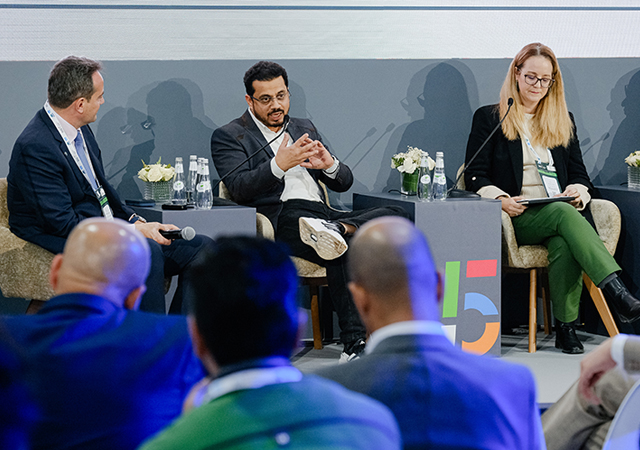
Holcim officials at the launch of the ECOCycle technology.
ECOCycle uses Holcim’s advanced circular technology to accelerate change, building cities from cities and closing the loop in construction.
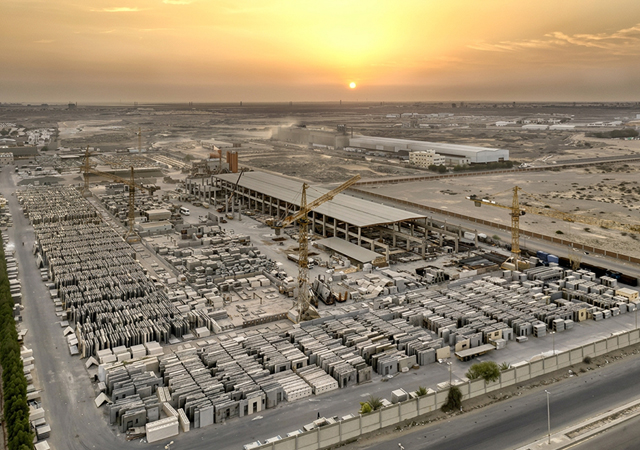
Demolition debris currently accounts for an estimated 70 to 75 per cent of the nation’s total solid waste. The ECOCycle technology recovers and reprocesses materials from old structures and feeds them back into the construction cycle, guaranteeing between 10 and 100 per cent recycled content in every labelled product with no compromise on technical performance.
The closed-loop system is designed to support the UAE’s broader environmental ambition to divert 75 per cent of its waste away from landfills. While new to the Middle East, the technology has already been deployed by Holcim across multiple global markets, including a project in France that yielded a residential building constructed entirely of 100 per cent recycled concrete, which is claimed to be a world first.
ECOCycle products can contribute to internationally recognised green building certifications, giving developers, architects, and contractors confidence that they are building responsibly.
Ali Said, Chief Executive Officer of Holcim UAE and Oman, stated during the launches that the company is effectively building cities from cities, allowing developers and architects to meet ambitious circularity and green building certification goals without sacrificing material quality. Said emphasised that the localised production approach reduces the extraction of primary raw materials, conserves natural resources, and significantly strengthens the domestic industrial ecosystem.
The expansion of sustainable building solutions highlights a broader regional trend as Gulf developers face mounting pressure to hit strict environmental benchmarks while sustaining a rapid pace of infrastructure growth. By scaling these proven solutions locally, Holcim aims to establish a new high-performance benchmark for the regional built environment.