













Nearly nine years after it was announced, NEOM’s strategic direction has increasingly split into two distinct tracks. While industrial, energy, and digital works at Oxagon on the Red Sea coast continue to advance, the flagship tourism and urban showpieces that defined the project, including The Line and Trojena, have stalled, been scaled back or transferred to external developers.
Spanning approximately 26,500 sq km in Saudi Arabia’s Tabuk province, NEOM was originally conceived as an interconnected ecosystem of futuristic urban, industrial, and energy hubs. Its most ambitious element, The Line, was designed as a 170-km linear city for nine million residents, enclosed by twin mirrored skyscrapers and planned to operate without cars, roads or carbon emissions.
However, key elements of the $500-billion megaproject are being recalibrated. Major contracts for The Line have been suspended or cancelled, and its original 2030 completion targets effectively abandoned. This shift stems from a broader strategic pivot by NEOM’s parent entity, the Public Investment Fund (PIF), which is redirecting capital away from speculative giga-projects and toward endeavours with nearer-term economic returns, such as core industrial infrastructure and preparations for the 2034 FIFA World Cup.
OXAGON … IN PROGRESS
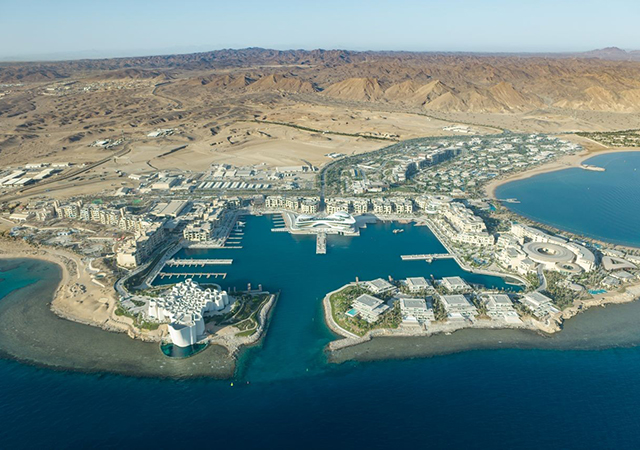
Oxagon is the one part of NEOM where major packages are completing or starting on time. The region will host a world‑class port, an integrated industrial district, cutting‑edge data centre facilities and renewable energy assets.
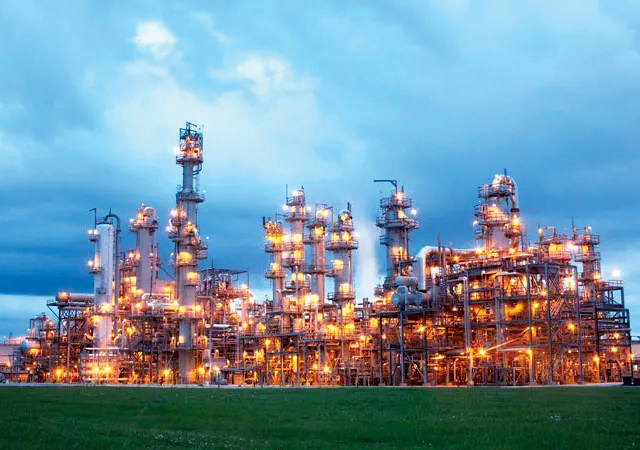
Oxagon’s most striking development is the $8.5-billion NEOM Green Hydrogen Company plant, a joint venture of Acwa Power, Air Products and NEOM. Construction of the project is complete and commissioning is under way, with commercial operations targeted for next year. The facility is supported by about 4 GW of solar and wind capacity, and Air Products is the exclusive offtaker of the green ammonia under a 30-year agreement. The project has been designed to produce 600 tonnes per day of hydrogen and up to 1.2 million tonnes a year of green ammonia.
Oxagon has also made known its ambitions to position itself as a global AI infrastructure hub, having already drawn in Saudi-based developer and operator of sustainable digital infrastructure DataVolt, which in February 2025, signed a $5 billion agreement to build a net-zero AI data centre campus at the futuristic industrial city.
PIF-company HUMAIN and DataVolt recently broke ground on an AI-ready data centre at Oxagon. The ground-breaking marks the start of construction on the 360 MW first phase of Datavolt’s wider planned 1.5 GW Oxagon campus. The project aims to deliver high-density digital infrastructure designed to support the rapidly growing compute requirements of advanced artificial intelligence.
The facility is expected to integrate renewable energy sources, innovative cooling technologies, and high-performance computing clusters to support large-scale AI and cloud workloads, with the first 100 MW anticipated to be available in 2028.
The project brings together HUMAIN’s capabilities across the AI stack with DataVolt’s expertise in developing, financing, delivering and operating large-scale digital infrastructure.
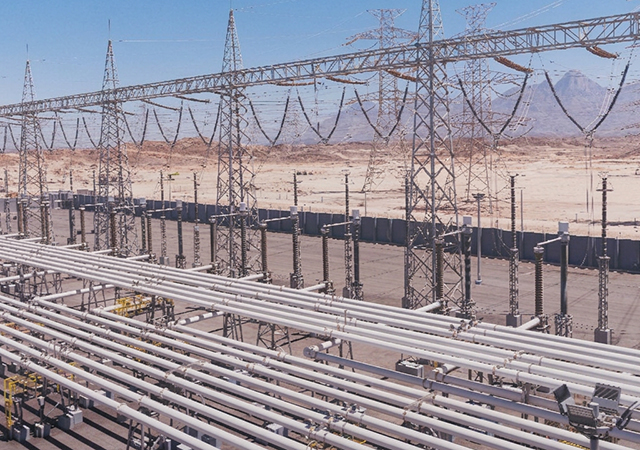
The newly completed high voltage Bulk Supply Point (BSP) South substation adds 1.8 GW of new capacity and distributes it across Oxagon’s power network.
The companies expect the project to benefit from Oxagon’s industrial infrastructure – including pre-zoned industrial land, at-scale energy resources and low-latency subsea cable connectivity to Europe and Africa – while its Red Sea coast location, proximity to renewable energy and green hydrogen projects, and access to international fibre-optic networks strengthen its credentials as a global AI infrastructure hub.
The facility last month secured its anchor tenant when HUMAIN and DataVolt signed a preliminary framework agreement with AI cloud computing company Nebius to allocate computing capacity of up to 50 MW within the AI data centre complex project.
Among other developments, Enowa, the energy, water and hydrogen subsidiary of NEOM, announced in August that it has commissioned a new power substation at Oxagon, thus increasing the available electricity capacity in the region to 3.15 GW. The high voltage Bulk Supply Point (BSP) South substation adds 1.8 GW of new capacity and distributes it across Oxagon’s power network, stated Enowa in its LinkedIn post.
According to Enowa, the additional capacity is intended to support expanding industrial activity and future tenant operations at Oxagon.
Meanwhile, NEOM is reported to have floated an expression of interest (EoI) notice to consultants for the design of a freight rail network connecting to the Port of Neom at Oxagon to the Saudi Arabia Railways’ (SAR) North-South Railway. The scope of work for the estimated 400-km line includes project feasibility studies, concept design and route alignment, said a MEED report.
SAR’s North-South Railway is a 2,750-km network built primarily to move minerals from mines in the north of the kingdom to industrial and export hubs on the Gulf coast. Al-Baseeta junction, where Oxagon’s proposed line would connect, sits on this network in Al-Jawf province, in the northwest of the country. The railway also carries a passenger service between Riyadh and Qurayyat, and has transported commercial freight such as sulphur and phosphoric acid.
THE PORT: ACTIVE, BUT BEHIND SCHEDULE
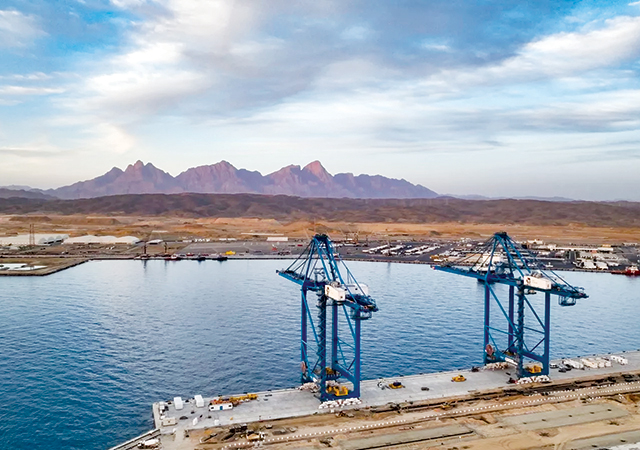
The Port of NEOM is currently operational, with the opening of its flagship container terminal – originally scheduled for last year – expected shortly. According to the port’s website, T1 container terminal, which is nearing completion, is designed for scale with a 550-m access channel, 18.5-m draft and 900-m quay wall to accommodate the world’s largest vessels. Repurposed dredged materials, renewable energy and fully electric equipment will support future-ready operations, embedding sustainability across every stage of the project.
The website indicates that 2027 will represent its first full year of operations as activity and capacity build to 1.5 million TEU, supported by the kingdom’s first fully automated ship-to-shore cranes.
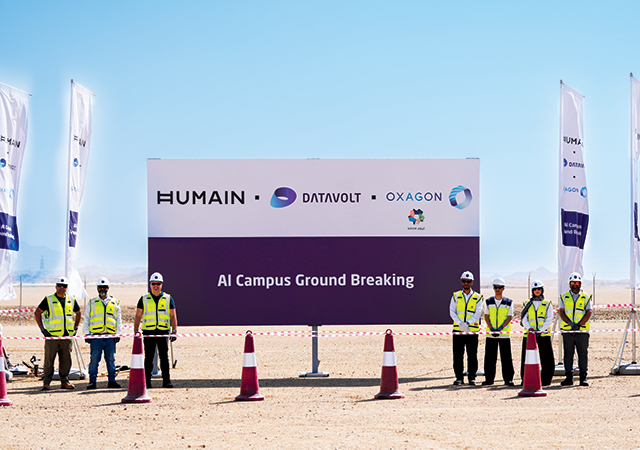
HUMAIN and DataVolt recently broke ground on an AI-ready data centre at Oxagon.
The port, however, is currently serving other traffic and taking on some cargo diverted due to the regional conflict involving Iran as it positions itself as a logistics hub. In fact, last month Port of NEOM and CEVA Almajdouie Logistics signed a memorandum of understanding (MoU) to enhance end-to-end logistics solutions across the emerging Europe–Egypt–Saudi Arabia multimodal corridor, with onward connectivity to GCC and Iraq markets, helping customers move cargo more efficiently between international shipping routes and inland markets.
THE LINE AND TROJENA: SUSPENDED
The Line is the project’s largest setback. Construction remains paused, with roughly 2.4 km built, and any resumption reportedly pushed past 2030. In April this year, PIF governor Yasir Al-Rumayyan said NEOM projects were being restructured to achieve higher economic efficiency and long‑term financial sustainability. He added that NEOM’s roadmap is built on disciplined, phased execution and commercial‑feasibility‑driven prioritisation, with the current phase centered on Oxagon as the primary economic and industrial engine.
In an interview with Al Arabiya Business, Al-Rumayyan said no projects in NEOM have been cancelled so far, adding that the project company has instead been instructed to reprioritise its spending. He said that the next phase will focus on delivering major projects with a reduced financial contribution from the Public Investment Fund.
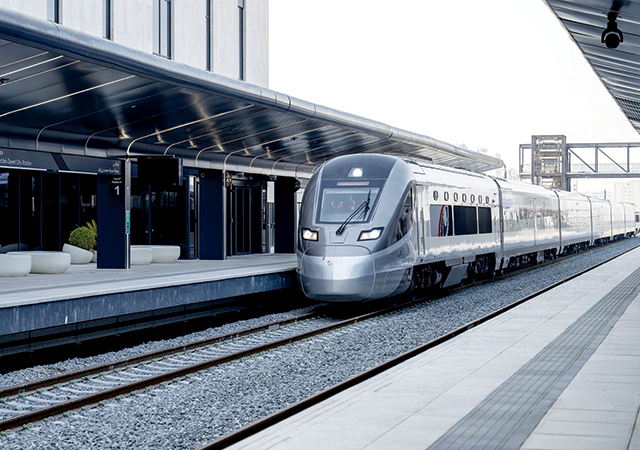
A number of contractors have reported that their work has stopped. Italian construction giant Webuild said that NEOM has terminated its contract for the Connector High-Speed Line project effective on May 27, 2026, with construction on the rail project approximately 20 per cent complete. The Connector High-Speed Line was part of infrastructure plans designed to support NEOM’s transport network.
The cancellation follows NEOM’s earlier decision in March to end Webuild’s contract for a three-dam system project as part of Trojena, which was intended to be a year-round mountain tourism destination. It has been marketed as a future host of major international events, including the Asian Winter Games 2029.
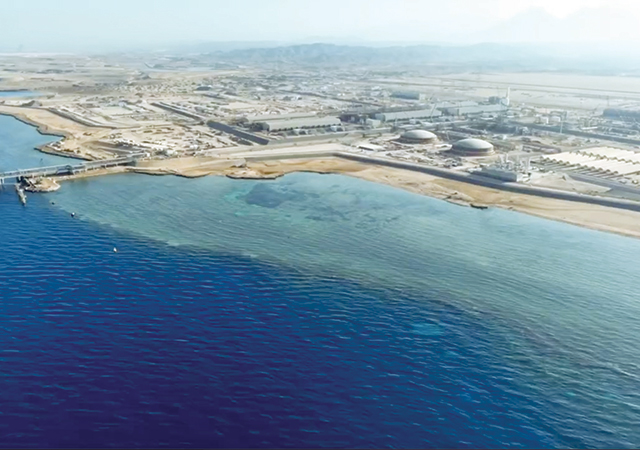
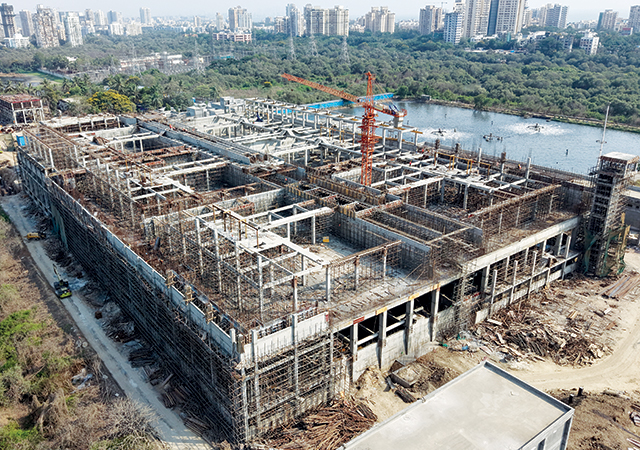
The $8.5-billion NEOM Green Hydrogen Company plant ... commissioning is under way.
In January 2026, the Olympic Council of Asia (OCA) and the Saudi Olympic Committee announced a framework postponing Saudi hosting of the Asian Winter Games, and in the following month, the OCA signed the 2029 host city contract with Almaty, Kazakhstan.
Webuild said the client had exercised a “termination for convenience” clause covering the construction of a system of three dams intended to supply a freshwater lake, along with an architectural structure known as “The Bow” in Trojena. The termination became effective March 29, 2026, when the works were about 30 per cent complete.
In March, NEOM also served a termination notice to Eversendai for the structural steel contract at the ski village at Trojena.
In the same month, Hyundai Engineering & Construction said a contract held with Samsung C&T and Archirodon to build a tunnel for The Line had been cancelled. The 12.5-km tunnel was intended to carry highways, metro services and freight rail systems designed to support mobility within the futuristic city. According to Hyundai E&C, the main reason for the cancellation was “a request for contract termination due to the client’s project restructuring.”
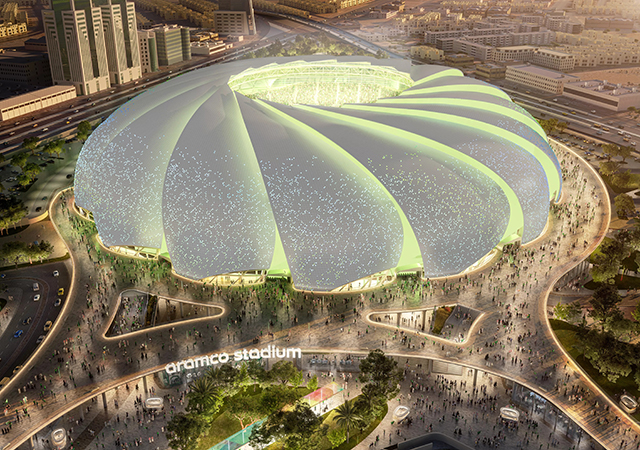
The most recent setback to the entire development came on October 4, when Reuters reported that Saudi Arabia is shelving the NEOM Stadium, one of the kingdom’s most ambitious for the 2034 World Cup. The 46,000-seat stadium was to sit about 350 m above ground.
SINDALAH: BUILT, BUT NOT OPEN
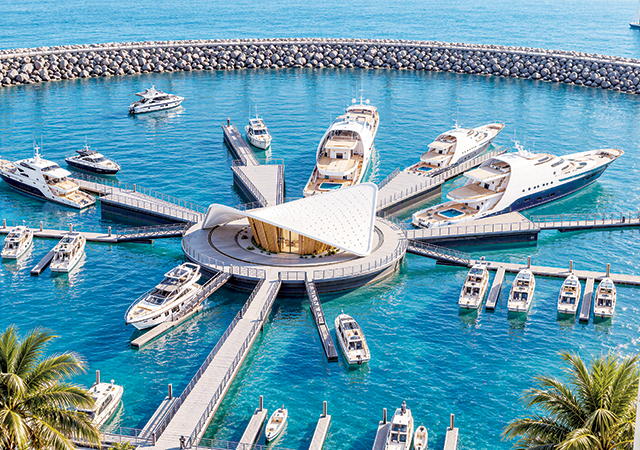
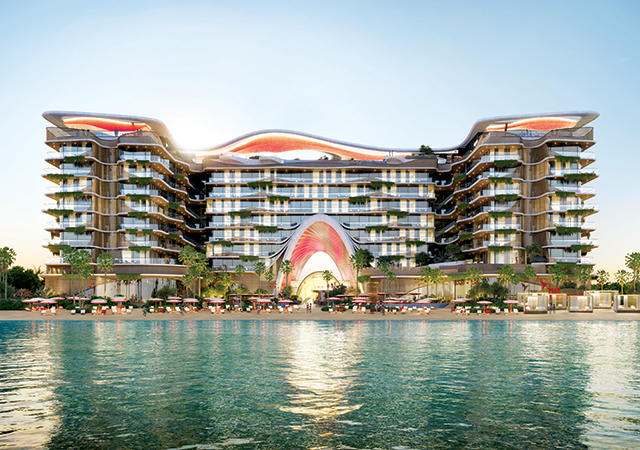
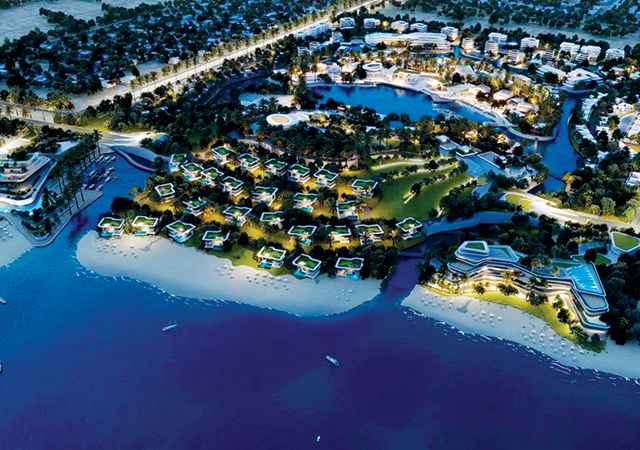
Sindalah, NEOM’s first luxury island and the first project to be completed, held a VIP opening in October 2024 but has not been opened to the public. According to a Reuters report in June 2026, state-backed Saudi developer Red Sea Global’s CEO has confirmed that it is taking over the island resort.
“It hasn’t officially been handed over but it will, and when it does we will then assume responsibility for it. We’ll assess how to complete it and bring it back to life,” John Pagano told Reuters on the sidelines of a Saudi business conference in Rome.